Sunday, 11 December 2011

Narrative Theories on chosen films

This Is England


This Is England is a film based around a 12 year old boy named Shaun who runs into a skinhead gang where he is first welcomed by Woody but then influenced by Combo's (returning from prison) racist views.


The narrative could be seen as fitting into Freytag's Dramatic Structure - 


  • Exposition - Introduction, school life and being bullied.
  • Rising Action - Joining the gang led by Woody, developing relationships with the members
  • Climax - Combo's impact on Shaun, Falklands War effects on Shaun, developing relationship with Combo, National Front views. 
  • Falling Action - Meeting back with Smell, Combo failing to win back Lol.
  • Catastrophe - Combo severely assaulting Milky.
Or possibly Todorov's theory, but the ending doesn't bring the chaos to an end. There are no clear heroes or villains in the film suggesting it doesn't fit Propp's Theory, neither is it a mysterious film therefore not fitting into Barthes' Enigma Code.

There is a slight sense of 2 sides in conflict in the film when Combo returns from jail expressing his views. This causes the original gang led by Woody to be split into another group led by Combo, taken to the National Front meetings and with a sense of racism.

The King's Speech

File:Kings speech ver3.jpg

The King's Speech is about Prince Albert becoming King of England and overcoming his speech stammer.

I personally do not think it fits into Freytag's theory as the narrative builds up towards the 1939 declaration of war speech peaking at the end of the film. 

I think it fits best into Todorov's theory. 

Narrative Theories

Films are more than often based around a Narrative theory. This dictates the events and characters in the film. There are different types of narrative theories such as - 

ARISTOTLE'S UNITIES

This is thought to be the first narrative theory made. The theory expects the narrative to be set in a real time, place and there to be actions allowing it to proceed and flow into a conclusion.

FREYTAG'S DRAMATIC STRUCTURE

Freytag was a 19th Century German dramatist and novelist who constructed his theory from the analysis of ancient Greek and Shakespearean drama. His narrative theory order was split into 5 different sections - Exposition, Rising Action, Climax, Falling Action and a Denouement, a Catastrophe OR a Resolution.

TODOROV’S THEORY

Todorov's theory is often referred to as a Classic or Hollywood structure. He bases it around films and programmes beginning with an equilibrium followed by disruptions causing disequilibrium followed by renewed peace for the protagonists (Main characters), bringing a new equilibrium to the chaos at the end. 


PROPP'S THEORY


V. Propp's theory was created in the early 20th century. He studied Russian fairy tales and based his theory on the way narrative's use 8 different characters - The hero, the villain, the donor, the dispatcher, the false hero, the helper, the princess and her father. He also stated that these are the only 8 different types of characters and 31 things they ever do. Once a character role is identified, it is easy to match it to the rest (Once identified the hero, it's easy to identify the villain and princess), this is called a Sphere Of Action. We can relate this theory to many films and tv programmes today. Eg. Lord Of The RIngs.


BARTHES’ ENIGMA CODE


This theory shows the narrative establishing enigmas (mysteries) and solving them as it proceeds.


LEVI-STRAUSS’ BINARY OPPOSITION 


This theory is based on the confilct of 2 sides. It could be as simple as 2 people or 2 large sides. Eg. Cowboys and Indians, LOTR, Star Wars.

Thursday, 8 December 2011

Second day of filming

On the 3rd of December our group met again at Jonny Cloke's (The chosen setting) to continue filming our opening. We shot more scenes and I felt it was a success. We used a variety of shots and techniques using panning, close up shots and over the shoulder shots.

Titling

I have examined the way in which titles are used on 3 films:

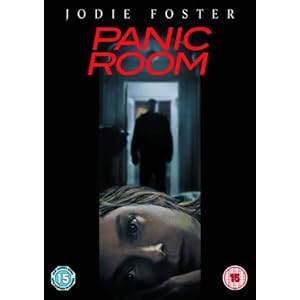
Panic Room


In the opening credits of Panic Room are designed to fit into parts of the buildings and window angles in the city - New York. These huge buildings suggest a lot of power and importance to the credits shown on the larger buildings.

North By Northwest


The opening credits for North By Northwest are a lot simpler. To start with there are just titles sliding into the frame and then off in a white font on a green background. At 0.38 the backrgound changes to a typical American skyscraper building with mirrored windows showing the traffic. 

Se7en


In the opening of Se7en, the way the titles aren't on the screen for long and the focus applied mainly towards the filming suggests it's less about the actors and more about the concept of the film. The titles are small and in somebody's handwriting which also takes away the focus from the actors. The credits are in white on a black background - simple. 

Range of openings

I have looked at 3 different films looking at some of the basic elements of the opening 2 minutes. I have studied:
  • The Titles
  • The Setting
  • The Characters
  • The Style
  • The Sounds
Happy - Go - Lucky


Happy - Go - Lucky is produced by "Summit Entertainment" which is in a plain font and uses a plain blue and black colour scheme. The rest of the titles are also the same colour and appear along side the opening scene (The character on her bike) on the opposite side of the frame. There are a series of takes of her riding her bike around London. The camera is facing as if the passenger in front of her has turned around. The opening 2 minutes is just her travelling on her bike and just arriving at her destination which makes it hard to determine a genre. However, the music and the colours used perhaps suggests a more femenine based drama or a "Rom-Com". 

Shaun Of The Dead


Shaun Of The Dead opens with a soundtrack which has a spooky sense to it already perhaps putting it into a horror genre. The opening shots are face to face shots of 2 characters (1 being played by Simon Pegg, associated with Comedy films), from each person's point of view. A character played by Nick Frost then enters the scene with a crude line suggesting the film's going to be a typical Pegg and Frost comedy duo. The opening is set in a pub - a familiar setting. This allows the audience to relate with the film and involves them. 

London To Brighton


Unlike the other 2 films, London To Brighton immediately provides instant action - the 2 girls running into the toilets, one bleeding and saying to the other to stay hidden while she's gone. This makes the audience have to invent the previous scene and makes them think about the film a lot more than just a general introduction where the audience are learning at the same pace as the film travelling. In this opening, there's something that the film is hiding from the audience. The shots in the opening scene are also close or very close to the actors. This makes the audience feel the action and fear the characters are experiencing. The feeling is also strengthened by the hand held camera which adds to the panic. From this we can assume the film could be an action/thriller based genre.

First day of fliming

On the 27th of November, myself, Jonathan Sollo, Jonny Cloke and Arron North started filming at our chosen location. We planned the film together and wrote down the basic story line we wanted to follow. We also to included details such as the the props we might need to include.